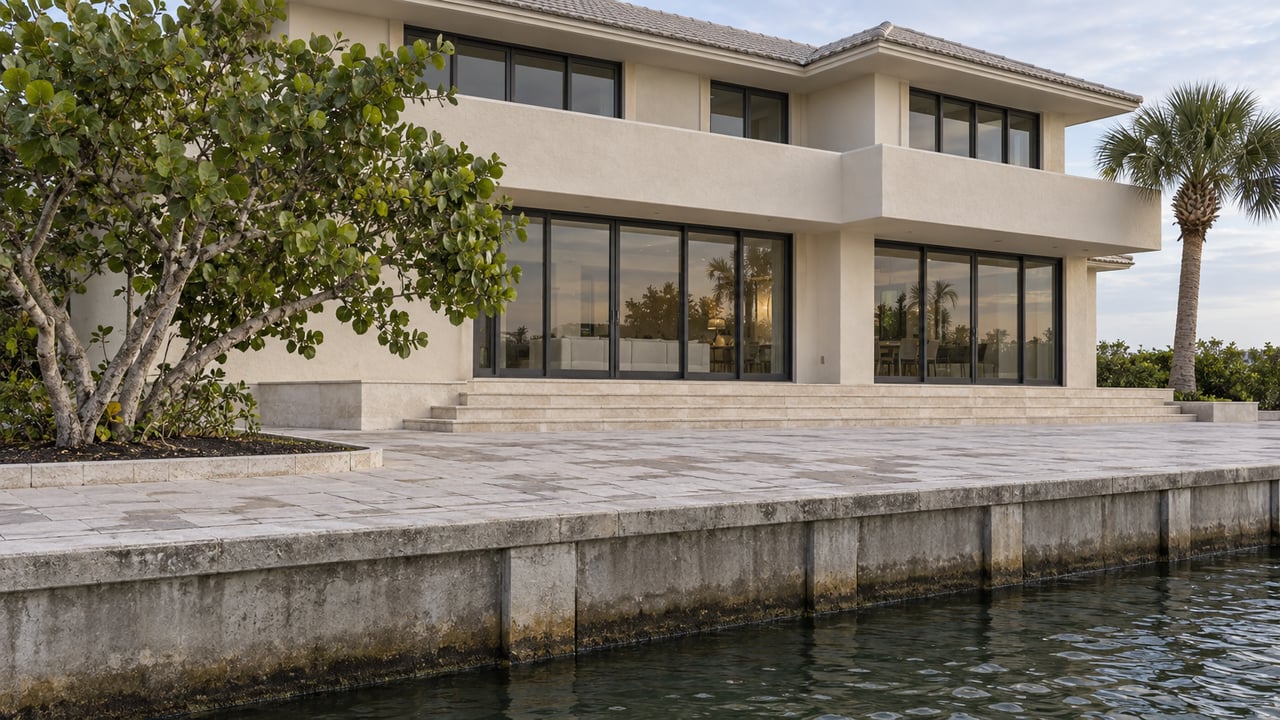
Tarpon Springs Waterfront Homes Don't Share One Insurance Story
October 1, 2026
Two listings can carry the same asking price in Tarpon Springs and cost their next owner very different amounts to insure. Not because one home is bigger or newer, but because flood insurance here is no longer set by neighborhood or even by zip code. Since FEMA moved to its Risk Rating 2.0 system, premiums are built parcel by parcel from three inputs: distance to the nearest flooding source, the cost to rebuild the structure, and how high the first floor sits above base flood elevation. A house on Whitcomb Bayou and a house on a Lake Tarpon canal can list for the same number and still land on opposite ends of a several-thousand-dollar-a-year insurance gap.
That matters more here than in most Tampa Bay cities, because Tarpon Springs isn't built around one body of water. The city wraps around a freshwater lake, a tidal river, a historic bayou, and the Gulf of Mexico, and each of those edges prices risk differently. A buyer comparing two homes labeled "waterfront" is often comparing four separate insurance realities without realizing it.
Before 2021, flood premiums were largely set by a property's flood zone designation, which meant two homes in the same zone paid roughly the same rate regardless of how they actually sat relative to the water. Risk Rating 2.0 threw that out. Pricing now runs off the specific parcel: how far the structure sits from a river, bayou, canal, or the Gulf, what it would cost to rebuild it, and how high the first floor sits above base flood elevation. Two addresses a few streets apart can price very differently. That difference reflects the parcel-specific calculation, not simply whether a home sits on a canal or a bayou.
For a typical $600,000 dwelling in Tarpon Springs in 2026, that math currently produces homeowners premiums somewhere between $5,100 and $9,700 or more per year, with waterfront and historic properties landing on the higher end of that range. A documented elevation certificate showing a home sits above the base flood line is often the single cheapest thing a seller can hand a buyer to make a deal work, because it gives the new owner's insurer a number to underwrite against instead of a guess.
The pressure to have that number ready is only building. LiveCovered reports that Citizens Property Insurance began requiring flood coverage on $400,000-plus homes carrying wind coverage as of January 1, 2026, and that requirement extends to all remaining Citizens personal residential wind policies by January 1, 2027. Even outside Citizens, annual increases on most existing NFIP policies are capped at 18 percent under the 2014 Homeowner Flood Insurance Affordability Act, which means a policy that looks affordable today can still climb steadily for years without any single jump feeling dramatic.
The label "waterfront" covers ground that behaves nothing alike once you get past the listing photo.
| Community | Water type | What actually shapes the cost |
|---|---|---|
| Whitcomb Point | Canal with direct Gulf of Mexico access | Luxury single-family homes built 2003 to 2005 on a cul-de-sac, most with a private boat dock and a quick run out to Three Rooker Island or Caladesi Island |
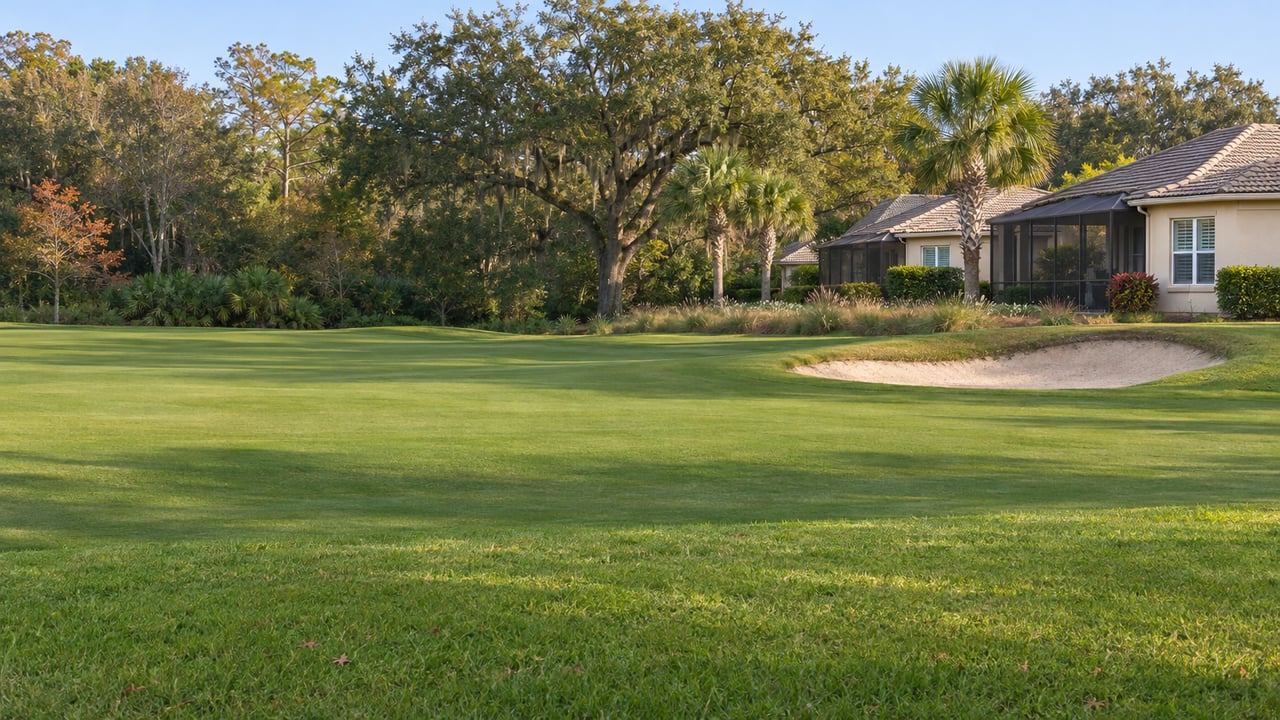
| Whitcomb Place | Adjacent to Whitcomb Bayou | Moderately priced 1990s-era homes near Craig Park and the Tarpon Springs Golf Club, with a much smaller resale pool than the citywide market |
| Bayou Village | Near Whitcomb Bayou | Newer townhomes where flood and building insurance are already bundled into the association dues, so there's no separate individual flood policy to shop |
| Lake Tarpon canals (East Lake Road corridor) | Freshwater lake | Typically priced more affordably than bay or Gulf frontage, with different storm surge exposure than a canal that opens onto salt water |
| Sponge Docks / Dodecanese Blvd | Historic Gulf-facing waterfront | Took several feet of seawater during Hurricane Helene in 2024, a year after Idalia flooded the same district in 2023 |
A canal home with Gulf access, like the ones in Whitcomb Point, is underwriting a very different flood path than a freshwater lake home off East Lake Road. The Gulf-access canal connects to open water and storm surge. The lake canal doesn't carry the same surge exposure, which is part of why lake frontage in Tarpon Springs tends to price more affordably than bay or Gulf frontage even when the view and the dock look similar in photos. Meanwhile Bayou Village solves the problem a different way entirely: by pooling flood and building coverage into the HOA budget, a buyer there isn't shopping an individual policy at all, which is worth knowing if the idea of separately insuring a waterfront home feels like the bigger obstacle to buying one.
The Sponge Docks corridor is its own case. That district sat under real floodwater twice in two consecutive years, and any underwriting model built on elevation and distance to water is going to price that history into the parcel, not just into the zone.
Whitcomb Place is worth a second look precisely because its numbers look dramatic and aren't as settled as they appear. The subdivision holds 87 homes total, built mostly in the 1990s with a median construction year of 1994, and its trailing 12-month median sale price sat around $666,000 as of early August 2026, or about $290 a square foot, with homes typically going under contract in a median of 9 days. That's a striking price for a moderately built 1990s bayou-adjacent neighborhood, and the trailing-12-month figure was reported up 7 percent from the prior year.
Here's the catch: that year-over-year comparison is built from just four closings in the current 12-month window. In a subdivision that small, one high-end sale or one distressed sale can swing the median by tens of thousands of dollars without reflecting any real shift in what the neighborhood is worth. The same window showed cash buyers taking 3 of 5 closings in the 12 months ending June 2026, which is another number that reads as a trend but is really a coin flip at that sample size. None of this means the Whitcomb Place number is wrong. It means a single quarter's worth of closings in a tiny enclave deserves more skepticism than a citywide median built from hundreds of sales.
Zoom out to the whole city and a similar pattern shows up at a larger scale. Between July 2025 and July 2026, the median list price for detached houses in Tarpon Springs climbed from $459,000 to $549,900, while condos moved from $190,000 to $219,000 over the same stretch. Read on its own, that looks like a market getting steadily more expensive across the board.
But look at what actually closed. Over the three months ending May 2026, the median sale price sat at $386,000, down slightly from the same period the year before, while the median sale price per square foot fell to $234, down about 10 percent year over year. Homes also took longer to sell, a median of 52 days compared to 46 days the year before, even though more homes changed hands in May 2026 (146) than in May 2025 (119).
List prices climbing while sold price per square foot falls and days on market lengthens is not a contradiction. It's a market where sellers are asking for more than the typical closing is actually delivering, and where buyers are taking longer to commit at those numbers. A waterfront enclave like Whitcomb Point or Whitcomb Place can still command a real premium inside that pattern. What it can't do is tell you anything about a freshwater canal home three miles away or a townhome in Bayou Village. Those are different insurance bets wearing the same "Tarpon Springs waterfront" label.
None of these are legal or financial advice questions. They're the practical groundwork that turns a listing photo of water into an actual number you can budget around, before you're the one holding the policy.
Does a home's flood zone ever change? Yes. FEMA updates flood maps periodically, so an elevation certificate or flood zone letter from several years ago isn't a guarantee of where the parcel sits today. It's worth confirming the zone is current rather than relying on paperwork from an earlier sale.
Is flood insurance required on every waterfront home here? Requirements can vary by property. Plenty of buyers in lower-risk zones still choose to carry it anyway, given that Tarpon Springs sits at the meeting point of a lake, a tidal river, a bayou, and the Gulf.
Will premiums keep rising the same way for everyone? Not uniformly. Citizens' flood mandate is phasing in through January 2027, and NFIP increases are capped at 18 percent annually, so the climb is structured rather than a single shock. But it is ongoing, and a rate quoted today shouldn't be assumed to hold for years without checking again.
If you're weighing a specific address against another and want to know what its actual flood zone, elevation history, and insurance exposure look like before you write an offer, I'm happy to help you pull that together. You can find current listings and more on Tarpon Springs through my site, or reach out directly and let's talk through what a specific property actually costs to carry, not just to buy.
Brenda Endres — Let's Connect.
This article is general information, not legal, tax or financial advice. Consult a qualified professional about your situation.
Stay up to date on the latest real estate trends.
If your home came off the market without selling, review the pricing, buyer feedback, presentation, and property details before relisting. Here is where to start.
With over a decade of experience in real estate, mortgage lending, and title services, I bring a well-rounded perspective to every transaction. My goal is to make buying or selling a home feel straightforward, informed, and tailored to your needs while building lasting relationships beyond closing day.