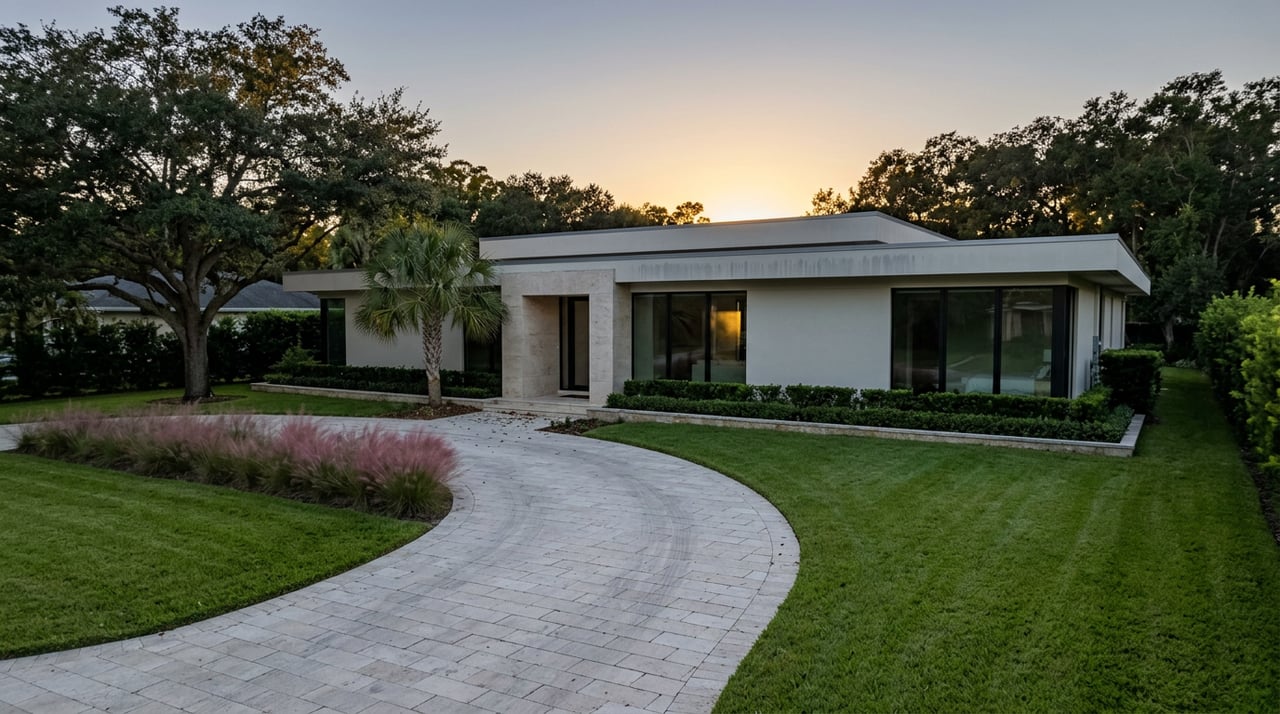
In Odessa, More Land Doesn't Lower Your Price Per Square Foot. It Raises It.
September 3, 2026
Somewhere around day ten of the option period, a buyer under contract on a lakefront lot in Odessa gets an inspection report that looks nothing like the one they got on their last house in a Trinity subdivision. Alongside the roof and HVAC findings sits a well contractor's pump performance test, a water sample pulled for coliform and nitrates, and a separate line item for the septic tank and drain field. None of that shows up on a property tied to county water and sewer. On a well-and-septic parcel, it is the whole second half of the inspection.
That moment tends to surprise buyers who assumed more land is simpler math than less land. It isn't. It's different math, and the numbers currently on the market in Odessa show exactly how different.
The common assumption in most suburban markets is that price per square foot drops as lot size goes up. A buyer stretches their land dollar by accepting a smaller house, or stretches their house dollar by accepting a smaller yard. Odessa doesn't follow that pattern for its acreage segment.
As of August 21, 2026, the overall Odessa market showed 200 active listings with a median list price near $705,000 and an average price of $410.57 per square foot. As of August 9, 2026, the 1-acre-plus segment of that same market showed 41 active listings with a median list price of $2,300,000 and an average price of $705.84 per square foot. That's not a modestly higher number. It's a per-square-foot price nearly 70 percent above the broader market, on the properties with the most land to spread the cost across.
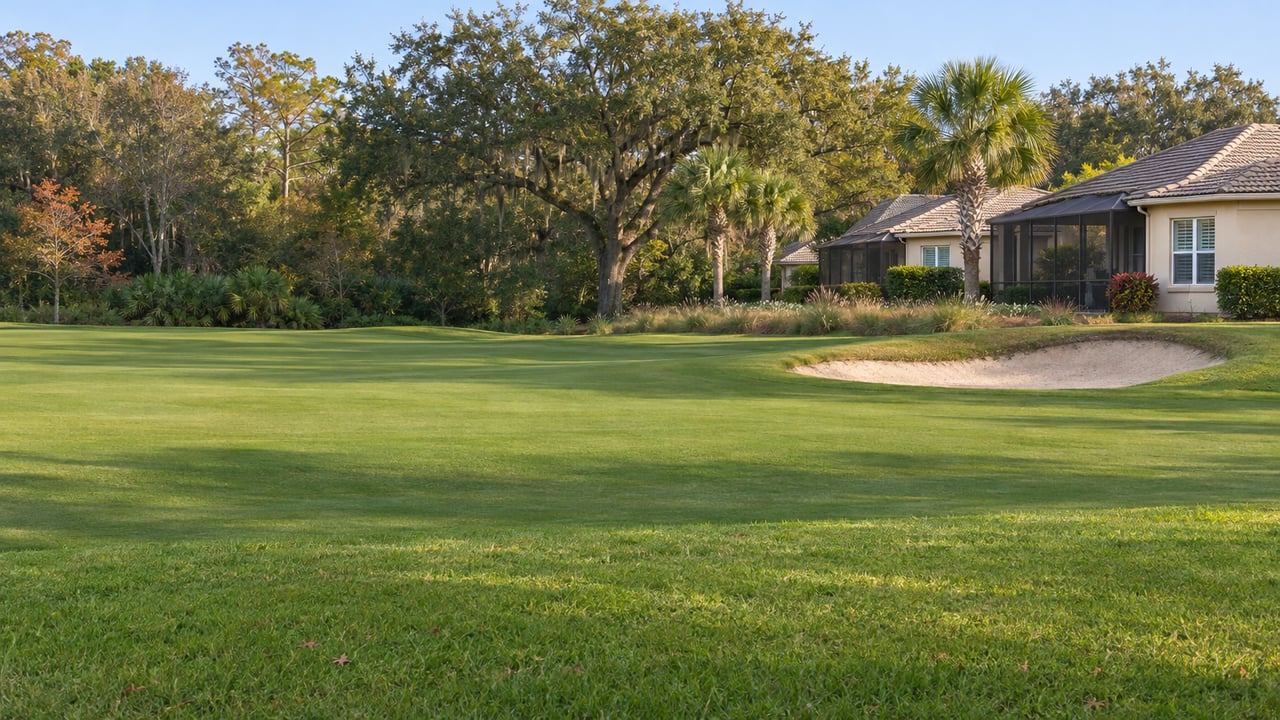
Compare that to The Eagles, a gated community inside Odessa built around golf courses and a pond, where a single active listing as of August 17, 2026 carried a list price of $775,000 at $266.32 per square foot.
| Segment | Active listings | Median list price | Avg. price/sq.ft. | Avg. days on market |
|---|---|---|---|---|
| Overall Odessa market (Aug 21, 2026) | 200 | $705,000 | $410.57 | 94 |
| Odessa, 1+ acre lots (Aug 9, 2026) | 41 | $2,300,000 | $705.84 | 164 |
| The Eagles gated community (Aug 17, 2026) | 1 | $775,000 | $266.32 | 37 |
Three segments, three completely different economics, all inside the same zip code.
Buying more land in Odessa doesn't discount the house. It's a premium on the house, not a markdown on it.
Part of the answer is what's actually built on these lots. Odessa's acreage listings skew toward custom and estate construction rather than production floor plans. A new build currently under construction on Lake Ann, a nearly 100-acre private ski lake inside the Wyndham Lakes community, is a custom Arthur Rutenberg home on a private half-acre homesite, not a spec house from a builder's catalog. A 2.5-acre parcel in the Grey Hawk community on Azra Road is being marketed less as a house and more as a development opportunity, with the land itself treated as the primary asset. When the land carries that kind of standalone value, the structure on it doesn't get priced down to compensate.
Water access plays a role too. Lake Ann has no public access, which means the lake itself functions as a private amenity that only the surrounding homeowners can use. Black Lake and the private three-lake chain inside Holiday Club work the same way. None of that shows up as square footage, but it shows up in the price.
Then there's what these lots don't have: an HOA or CDD assessment spreading shared infrastructure costs across every household in a subdivision. That absence is often marketed as a freedom, and for buyers who want it, it is one. But it also means the cost of getting water to the house and waste away from it doesn't disappear. It moves onto the buyer directly, priced into the property instead of billed monthly by a district.
This is the part that catches people off guard during due diligence, and it's worth budgeting for before you write an offer, not after your inspection period starts.
A pre-purchase well inspection and water test package from a licensed contractor in Central Florida currently runs $250 to $500, covering pump performance, the pressure tank, the wellhead, and a basic water panel for bacteria and nitrates. If the water needs a more thorough check for arsenic, manganese, or other contaminants, the panel alone can run $200 to $450. None of this is optional for buyers using FHA or VA financing. FHA loans typically require testing for coliform bacteria and nitrates at minimum, and VA loans carry similar requirements plus a minimum distance between the well and the septic system. That last detail matters for the military and veteran relocators this market regularly draws, since it can affect which specific parcels qualify for VA financing before the loan ever gets underwritten.
The septic side carries its own math. A standard septic inspection runs $150 to $450. If a system needs replacement, the cost ranges from $5,000 to $20,000 depending on the site conditions and the drain field design. A well pump sitting 100 to 200 feet down typically costs $1,500 to $3,000 to replace if it fails. Wells themselves tend to last 30 to 50 years, but the pumps and pressure tanks inside them usually need replacing every 10 to 15 years, which is worth asking about on any home built before the mid-2010s.
None of these numbers are large relative to a $2.3 million purchase. They are large relative to a buyer's expectations, especially for someone moving from a Trinity or New Port Richey neighborhood where water and sewer bills arrive from the county and infrastructure failures are the utility's problem, not the homeowner's.
The days-on-market gap between these three segments isn't a demand signal in the way it might look at first glance. Homes in The Eagles moved in 37 days on average as of mid-August 2026, while the 1-acre-plus segment averaged 164 days in its Aug. 9 snapshot, and the overall market sat at 94 days in its Aug. 21 snapshot.
That gap has less to do with buyer interest and more to do with transaction complexity. Custom and estate properties on private land typically involve jumbo financing, appraisals that lean harder on land value and lake access than on a comparable sales grid, and inspection periods that stretch to accommodate well and septic contractors on top of a standard home inspector. A buyer comparing a listing in The Eagles to one on an unplatted acre lot near Lake Grace or Rock Lake Drive should expect the second transaction to move at a fundamentally different pace, not a slower version of the same process.
For anyone touring acreage listings in Odessa, a few questions upfront save time later in the option period:
None of these questions are unusual for a rural or semi-rural Florida property. They're just questions that never come up on a house tied to county water and sewer, which is exactly why they catch buyers moving in from Trinity or New Port Richey off guard.
That contrast is worth sitting with if you're comparing Odessa against a neighboring suburb. A Trinity buyer researching CDD fees is weighing a different kind of cost, one built into a tax bill rather than a well casing. Odessa's version of that same conversation runs through septic permits and pump age instead. Different infrastructure, same underlying question: what is this specific property actually asking you to pay for, beyond the number on the listing.
Does every home in Odessa run on well and septic? No. Communities like The Eagles, Asturia, and other platted subdivisions typically connect to municipal or community water and sewer. The well-and-septic pattern shows up almost exclusively on the unplatted, larger-acreage parcels that make up Odessa's rural corridor.
Is well and septic cheaper to live with long term than city water and sewer? It depends on maintenance history. There's no monthly utility bill, but the homeowner absorbs the full cost of any pump, tank, or drain field failure rather than splitting it across a rate base. A well-maintained system can run for decades without a major expense. A neglected one can surface a five-figure repair during a sale.
Does buying acreage in Odessa always mean a slower closing? Not always, but budget extra time for financing and inspections. Jumbo loans, private appraisals, and well and septic contractor scheduling all add steps that a standard subdivision purchase doesn't require.
If you're comparing what your budget actually buys across Odessa, Trinity, or New Port Richey, the honest answer usually involves more than the median price on a portal search. Brenda Endres has spent years walking Tampa Bay buyers through exactly this kind of comparison, translating what a well inspection or a septic report actually means for your offer and your closing timeline. If you're weighing acreage against a gated community in Odessa, or trying to figure out what a property in Trinity trades for what you'd get further out, reach out and let's talk through the specific parcels you're considering. Let's Connect.
This article is general information, not legal, tax or financial advice. Consult a qualified professional about your situation.
Stay up to date on the latest real estate trends.
If your home came off the market without selling, review the pricing, buyer feedback, presentation, and property details before relisting. Here is where to start.
With over a decade of experience in real estate, mortgage lending, and title services, I bring a well-rounded perspective to every transaction. My goal is to make buying or selling a home feel straightforward, informed, and tailored to your needs while building lasting relationships beyond closing day.